

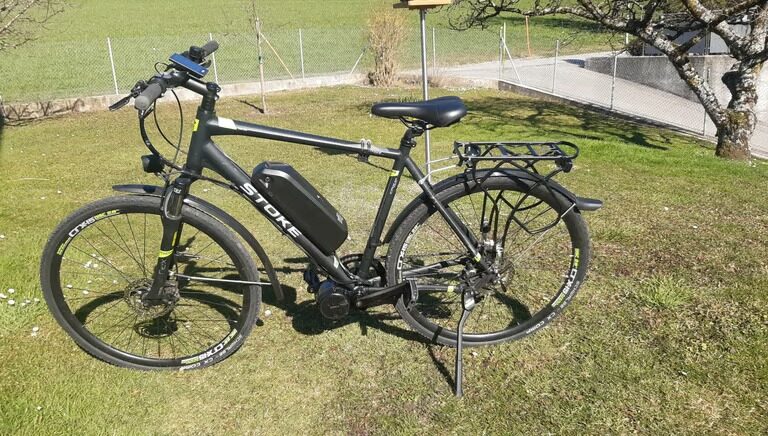
As soon as November rolls round, many cyclists notice that their battery ‘doesn’t last as long’ as it does in summer. In most cases, there’s nothing to worry about: it’s simply the chemistry of the lithium-ion cells reacting to the cold. Here’s how to understand this phenomenon, ride more comfortably in winter and recognise when it’s time to bring your battery to us.
Why cold weather reduces range
A lithium-ion battery stores energy through internal chemical reactions. When the temperature drops, these reactions slow down and the internal resistance of the cells increases. In practical terms:
- the battery struggles to deliver the required power, particularly on hills;
- the voltage of the cells drops more rapidly under load, and the battery management system (BMS) may cut out sooner;
- the charge indicator may show a lower reading than when warm, then rise again once the battery has warmed up.
This loss is largely temporary: once the battery has returned to room temperature, a battery in good condition regains most of its capacity. Cold does not wear out the battery in the same way as ageing does, but it does reveal its weaknesses.
The cold isn’t the only culprit
In winter, other factors also affect your range:
- under-inflated tyres and wet or snow-covered surfaces, which increase rolling resistance;
- thicker clothing and stronger winds;
- lights being on for longer, on bikes where they are powered by the battery;
- a tendency to select a higher level of assistance.
So, before blaming the battery, check your tyre pressure and make sure the drivetrain is clean.
Things to do before setting off
- Keep the battery warm: if it is removable, store it indoors (in your flat or office) until you’re ready to set off, rather than leaving it in a garage or on the bike outside overnight.
- For a battery integrated into the frame, if possible, store the bike in a sheltered room where it is less exposed to frost.
- Start off gently: the first few kilometres with moderate assistance will gradually warm up the cells.
- Leave a margin: plan a shorter journey than your usual summer range, so you don’t have to rely on the last few per cent of charge.
- Check the housing and connector: moisture, road salt and dirt tend to accumulate around the contacts.
Charging in winter: the essentials
The main rule is simple: do not recharge a battery whilst it is still cold. After a ride in cold weather, or if it has been left outside overnight, first allow it to return to room temperature in a warm, dry room. Recharging lithium-ion cells at temperatures close to or below freezing can cause lasting damage, even if this isn’t immediately apparent.
Otherwise, the best practices remain the same as they are all year round:
- Use the original charger or a charger that is fully compatible;
- Charge in a dry, well-ventilated place, away from flammable materials;
- Do not leave a battery charging unattended for hours on end in an unsuitable location.
You’ll find common maintenance tips in our guide How to look after your electric bike’s lithium-ion battery.
Is it a normal drop in performance or is the battery worn out?
The table below helps to explain the differences.
| What you notice | What this suggests |
|---|---|
| Shorter range only in cold weather; returns to normal in warmer conditions | Normal effect of cold weather |
| Sudden power cut-out when going uphill or starting off, even when the charge indicator is still showing a full charge | Weakened or unbalanced cells: a check is advisable |
| Range significantly reduced even indoors or in warmer weather | Capacity likely declining: capacity test recommended |
| Battery no longer charges or responds | Do not force it; bring it to us |
Winter is often the time when an ageing battery starts to let you down: its cells cope less well with the strain of cold weather. It’s better to know this before you break down far from home.
What to do if you’re unsure
Never attempt to open the casing or ‘revive’ a lithium battery yourself: it is dangerous and may cause further damage. Instead, bring it to the workshop, or contact us to arrange for it to be sent by post, using packaging that complies with the regulations.
We carry out a diagnostic check and then, if you wish, a capacity test to measure the battery’s actual output. If the cells are at the end of their life, we replace all the cells in the pack, whilst retaining the original casing, connector and BMS. Each battery is then tested and issued with a certificate and a QR sticker, which allows you to view its details on the [My Battery](/ma-batterie/ page. To find out what we check ahead of the cold season, see our advice on pre-winter diagnostics.
In summary
- Cold temperatures slow down the chemistry of the cells: range will temporarily decrease, which is normal.
- Keep the battery warm before setting off and allow it to return to room temperature before recharging it.
- A sudden loss of power or low range, even when warm, indicates that the battery needs checking.
- Never open a battery yourself: leave it to the professionals.
If you’re worried about your battery ahead of the colder months, pop into our workshop: check out our Battery Refurbishment and Repair page or get in touch with us.